Before you introduce yourself. Before you share your idea. Before you answer the question in the meeting. Your body has already spoken.
From posture and hand placement to eye contact and virtual cues, the smallest signals shape whether people trust you, listen to you or dismiss you.
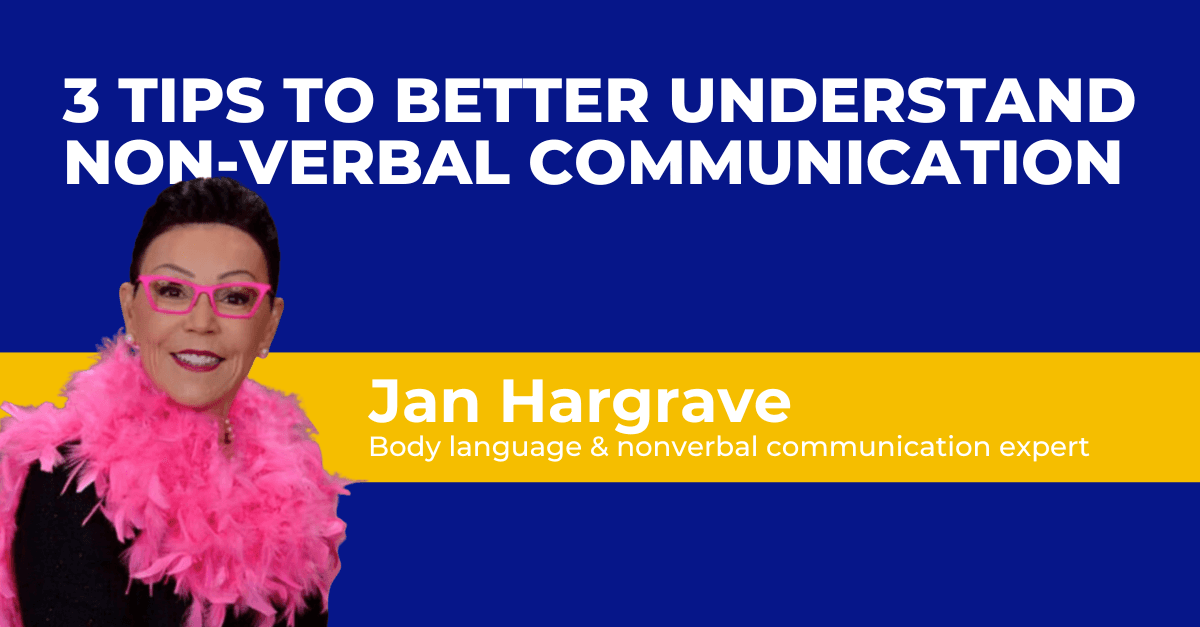
Jan Hargrave, globally recognized body language and nonverbal communication expert, has spent her career understanding what leaders are signaling long before they speak. She is known for her pink glasses and for defining small, intentional shifts that can change your perception.
If you are navigating interviews, meetings, presentations or high-pressure conversations, learning a few body language basics can dramatically shift how confident, credible and prepared you come across.
1. Body language habits that signal confidence
Square your shoulders and show your hands.
When you face someone directly — shoulders squared, posture upright, hands visible — you communicate confidence, openness and readiness to engage. Jan explains that our bodies naturally point where our minds intend to go, so angled shoulders or hidden hands can quietly signal distraction or disinterest.
“We always put our bodies where our minds should go.”
Try this:
When greeting someone, turn your body fully toward them
Keep your hands relaxed and visible rather than tucked away
Avoid slouching or shrinking inward
Confidence doesn’t require exaggeration. It requires intentional alignment between what you’re saying and how you’re standing.
2. Body language cues to watch for when scanning others
Do their gestures match their words?
Jan emphasizes that trust often breaks down when verbal and nonverbal messages don’t align. Someone may say they agree, but their body tells a different story through closed posture, delayed gestures or tense movements.
“When gestures don’t match the words, our brain feels it before we can explain it.”
When scanning the room, notice:
Are arms tightly crossed in a warm, comfortable setting?
Do gestures come after words instead of naturally alongside them?
Are there clusters of nervous movements (fidgeting, face-touching, clothing adjustments)?
One cue alone doesn’t mean much but patterns matter. Learning to read congruence helps you better understand resistance, hesitation or discomfort before it’s spoken aloud.
3. Body language that builds trust on virtual calls
Use purposeful hand gestures. Then bring them back out of frame.
On video calls, people trust faster when they can see non-threatening hand movement. A completely still “talking head” feels distant, while overly animated gestures feel distracting.
“When I can see your hands, I know I’m talking to a person, not just a screen.” — Jan Hargrave
Best practices for virtual presence:
Use hands briefly to emphasize points (especially when numbering ideas)
Keep palms angled slightly upward to signal openness
Let gestures appear, then rest your hands again
This balance humanizes you without overwhelming the screen and makes your message more memorable.
Put it into action
Leadership isn’t just about what you say. It’s evaluated on whether people feel safe, confident and engaged while you’re saying it.
Body language won’t replace competence but it can amplify it. When your posture, gestures, and presence align with your message, you remove unnecessary friction and lead with clarity.
Learn more
In the latest episode of The Cultivating Leaders Podcast, Jan dives deeper into nonverbal communication, understanding body language and leading with presence.